
Last updated November 15, 2026
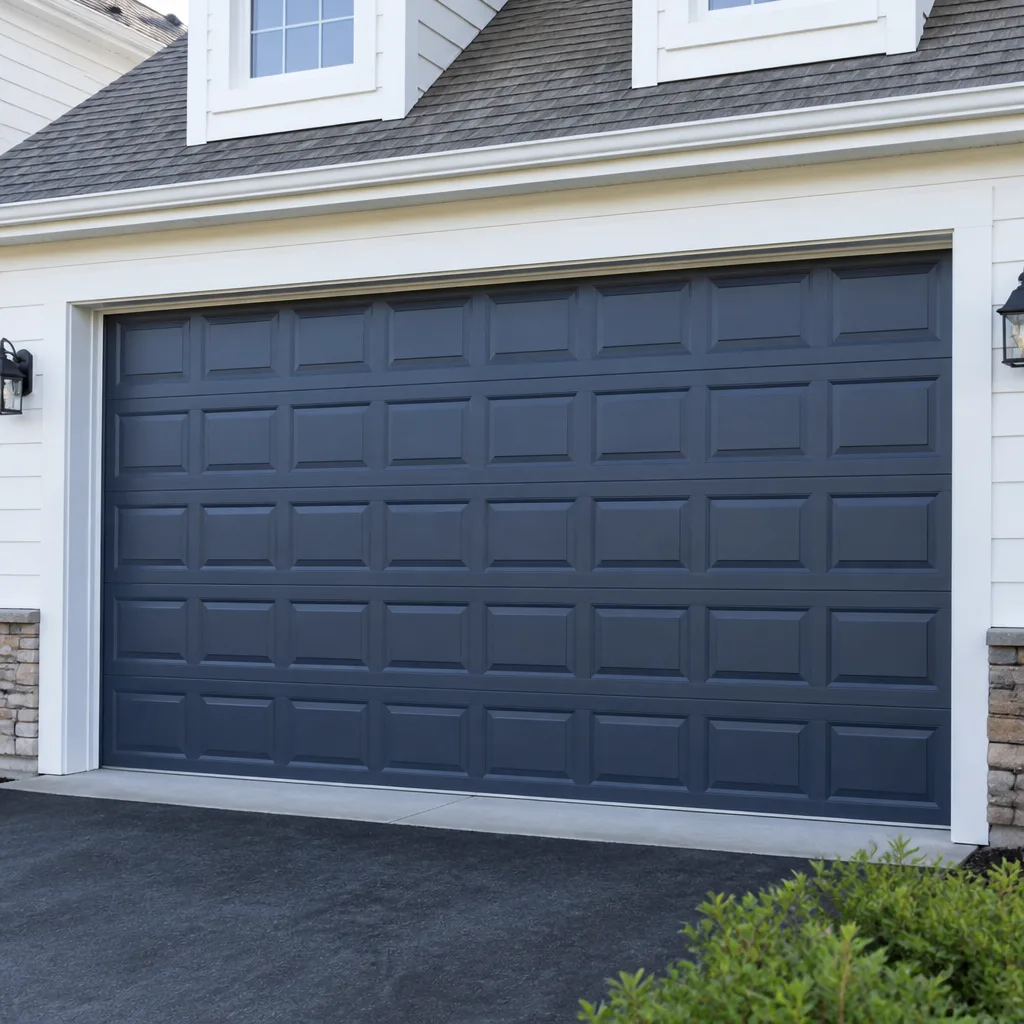 Raised-panel steel
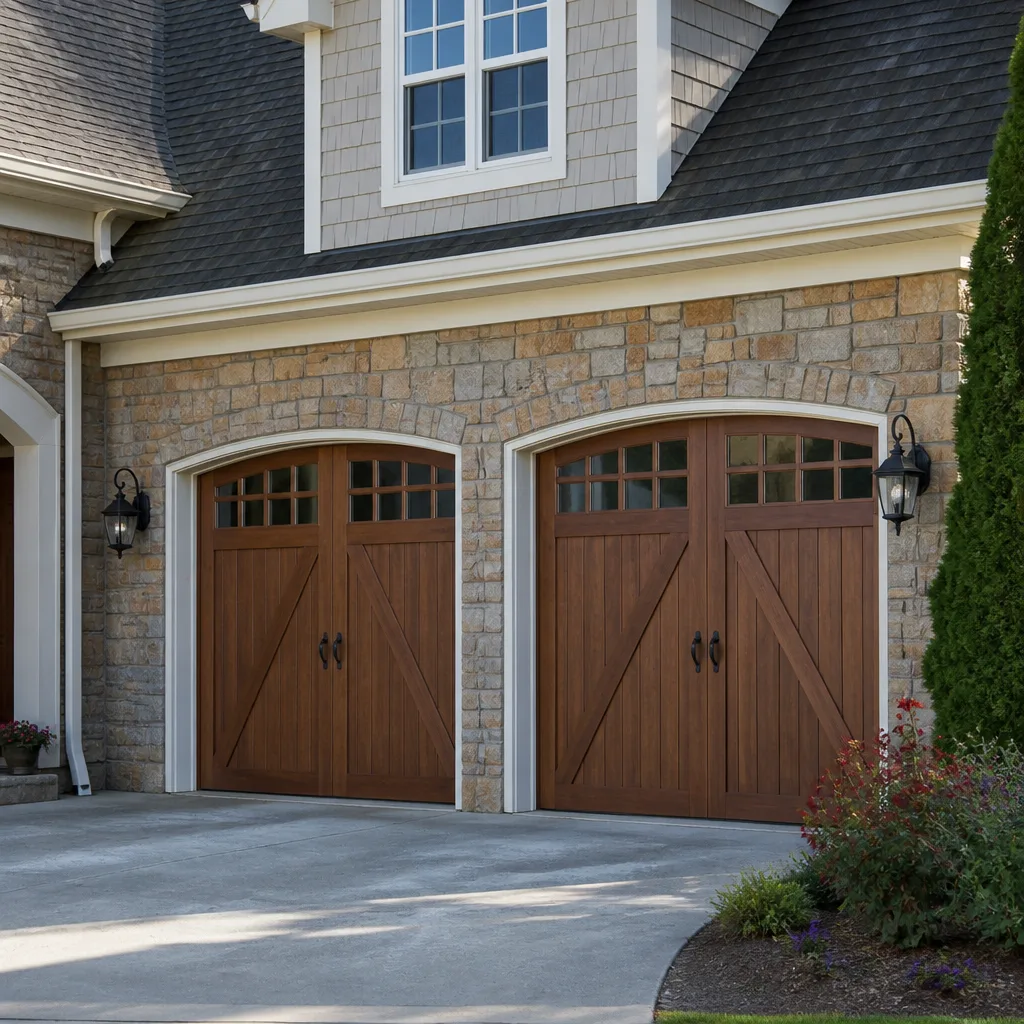 Carriage house
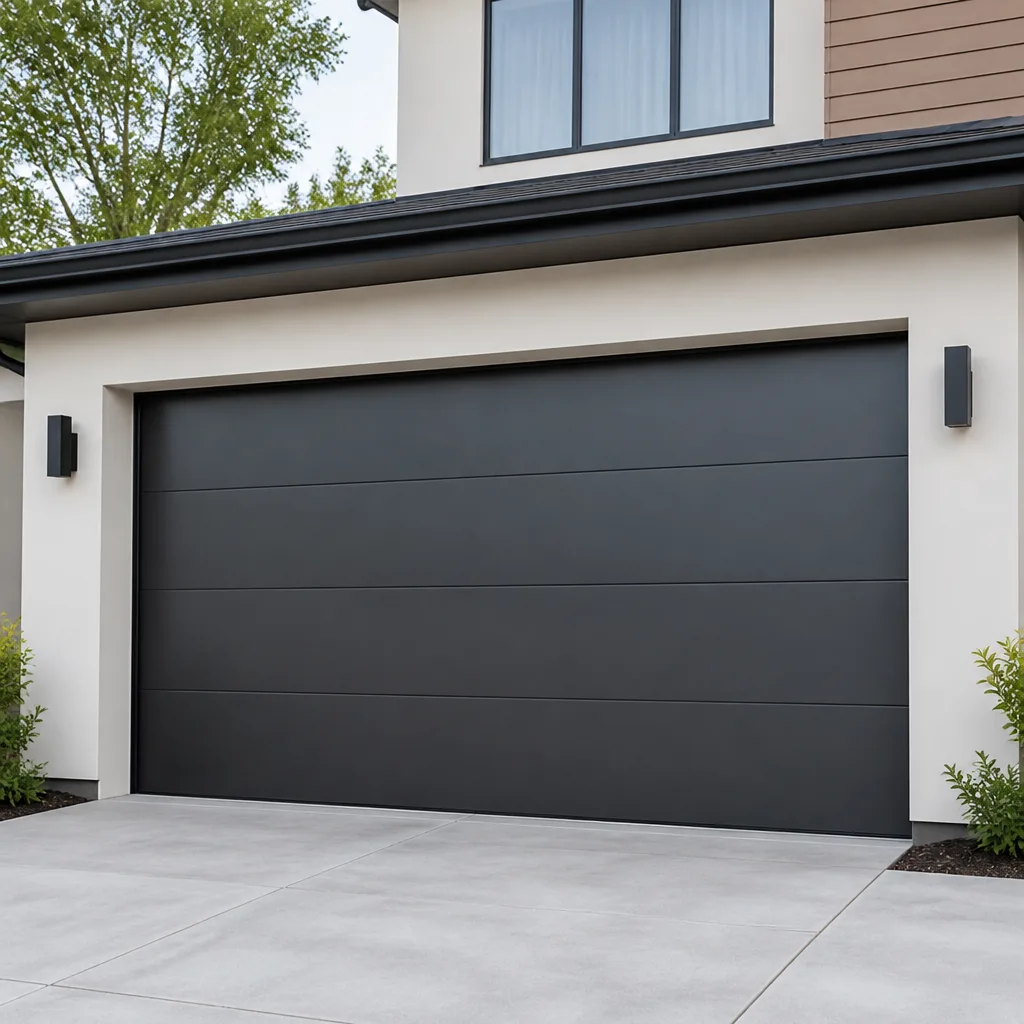 Modern flush
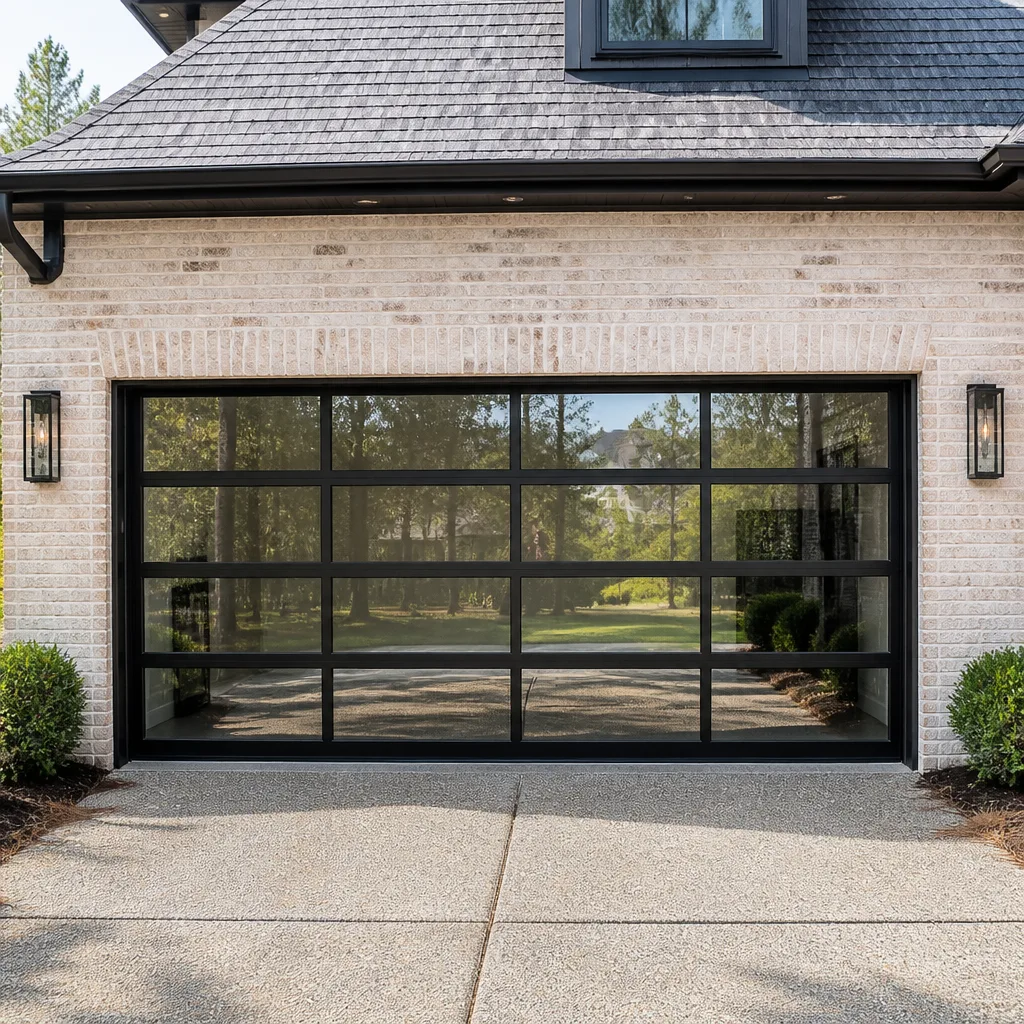 Full-view glass
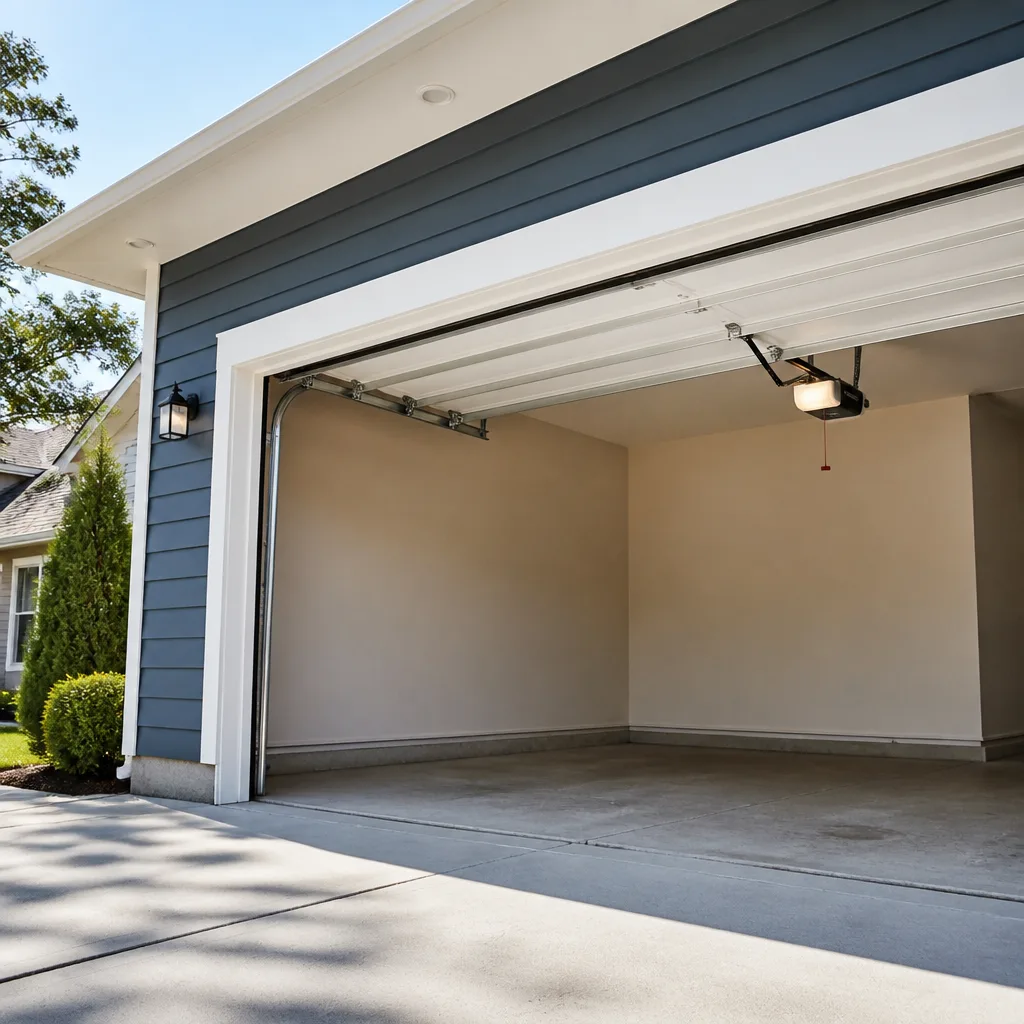 LiftMaster openers
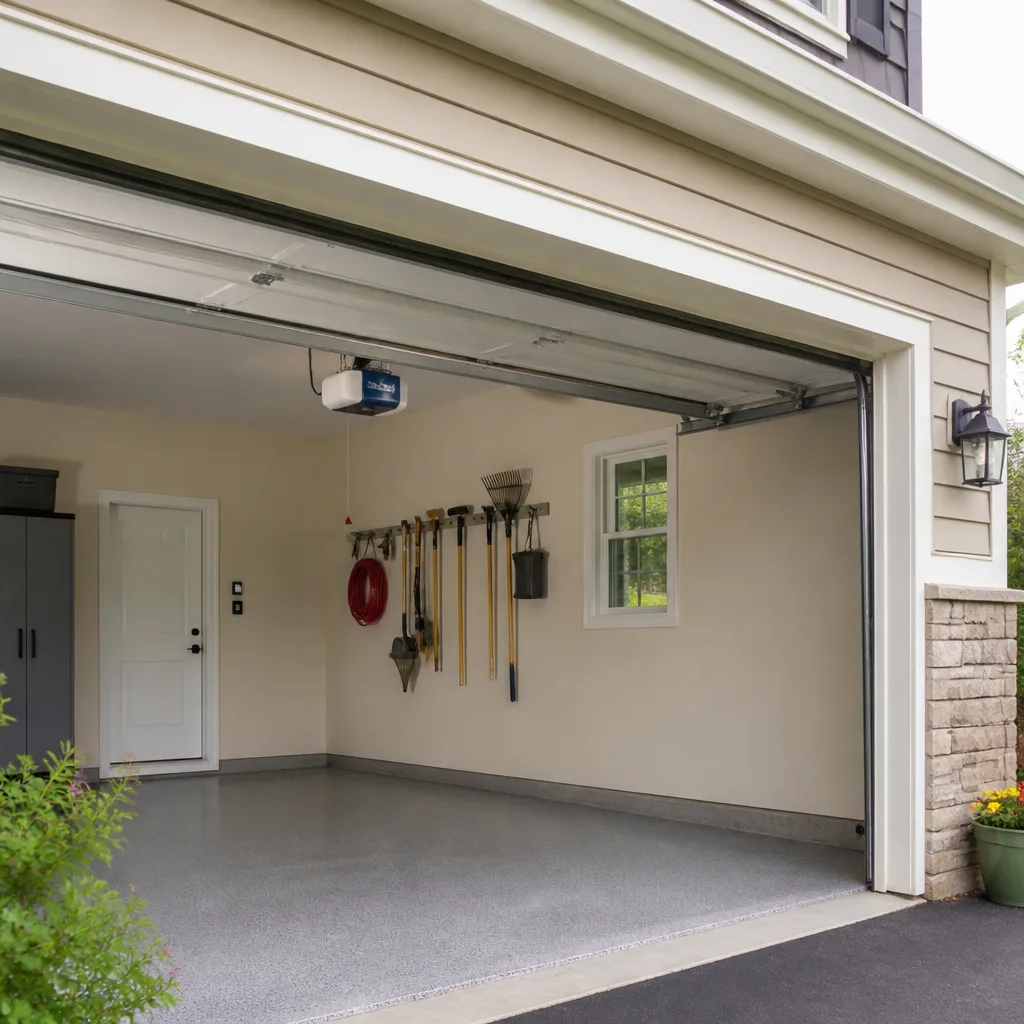 Chamberlain openers
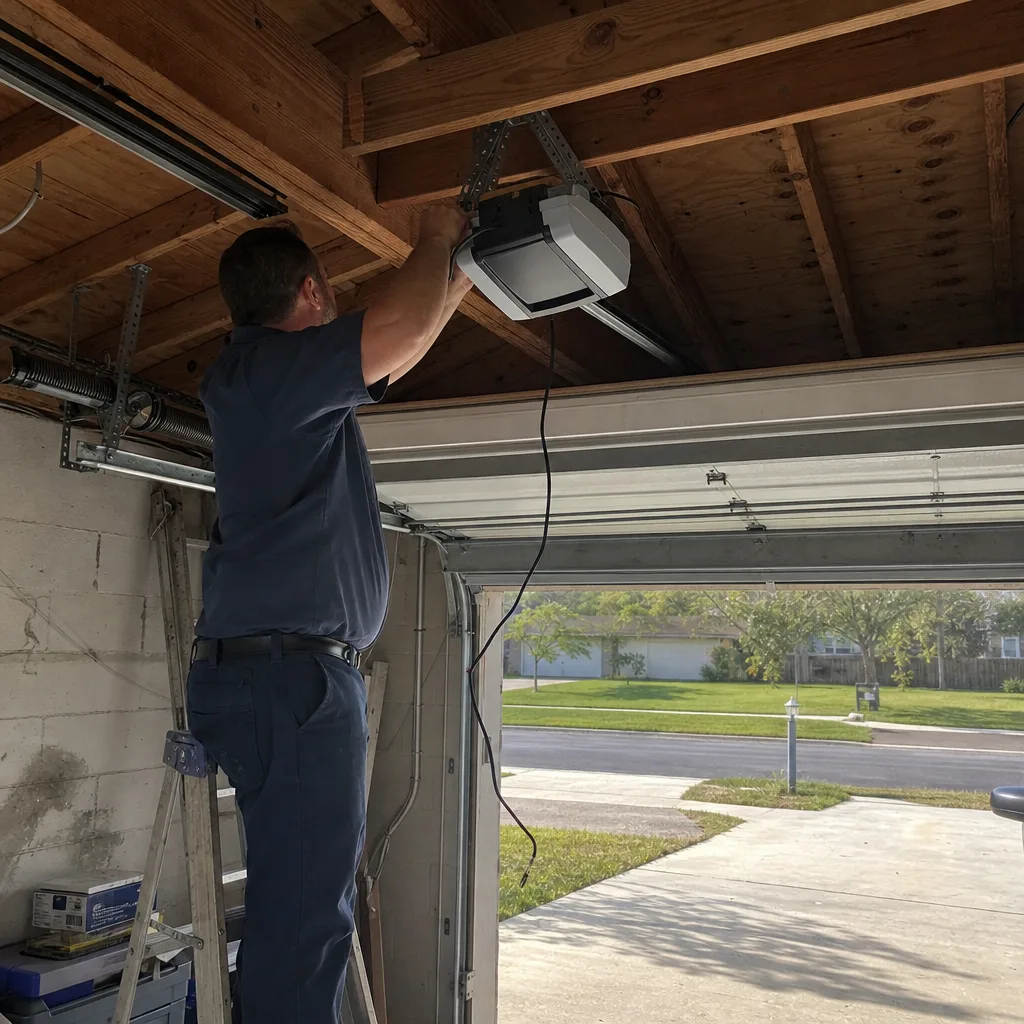
Full 25-point door and opener safety check with every visit - springs, cables, rollers, tracks, and your LiftMaster or Chamberlain opener included
You get a price before we start. It does not change when the pro arrives.
Get your free estimateGarage Door Emergency Preparedness Guide for Tallahassee Homes
The counterintuitive part of storm-season garage door trouble is this: the failure you can fix yourself in ten calm minutes becomes a real hazard when it happens at the wrong moment. Tallahassee homeowners tend to think of the garage door as either working or broken. In practice there’s a wide middle ground – a door that’s stuck, off its track, or hanging under spring tension – where the wrong move turns a repair into an injury. After a named storm moves through, the phone lines at every door company in town light up at once, and scheduled work can run days out. What you do in the first few hours decides whether your home stays secure. This guide covers the manual release sequence, temporary securing, storm-damage assessment, insurance documentation, and pre-storm prep specific to Tallahassee homes.
Quick Answer
If your garage door fails during or after a storm in Tallahassee, the priority order is: don’t force it, secure the opening, document the damage, and book professional repair. A door that won’t move may have a broken spring or a bent track, and pulling on it can cause the door to drop. Meanwhile, photograph everything for your insurer and use safe temporary measures to keep the opening closed. Garage door technicians are typically booked several days out after a major storm, so preparing now – knowing the manual release and having a plan – is what protects your home in the gap.
Styles & brands we work with
- Raised-panel steel
- Carriage house
- Modern flush
- Full-view glass
- LiftMaster openers
- Chamberlain openers
Table of Contents
- Why Tallahassee Storms Create Garage Door Emergencies
- How to Tell If Your Door Is Safe to Operate
- How to Manually Operate a Garage Door Safely After Power Loss
- How to Temporarily Secure a Door That Won’t Close
- What to Photograph and Document for Your Insurance Claim
- Pre-Storm Garage Door Checklist for Tallahassee Homes
- What to Do in the First 24 Hours After a Storm
- Brand-Specific Notes: What We See Most in Tallahassee
Why Tallahassee Storms Create Garage Door Emergencies
Tallahassee sits in a part of North Florida where tropical systems and strong summer thunderstorms are a seasonal fact. The garage door is the largest moving object on most homes and the most exposed. It’s a broad, mostly flat surface mounted on a wall that catches wind directly. When a storm rolls through, the door takes the load before anything else on the house does. That’s why a disproportionate number of our storm-season calls are about doors that bent, jumped a track, or stopped responding in the hours after the weather passed.
The mechanics behind storm-related failures are consistent:
- Wind load on a weakened door. A door with a slightly bent panel or a worn roller is fine on a calm day and fails under pressure. Storm wind finds the weak point.
- Power loss and opener stress. When the grid drops, openers stop mid-cycle. A door left partway open is a security and water problem, and restarting a stalled opener can burn out the logic board. We cover this in more detail on our garage door opener repair page.
- Debris impact. Branches and blown material strike panels and bend tracks. Even a small dent can throw the door out of alignment.
- Water intrusion at the bottom seal. Heavy rain pools at the threshold and works under a worn bottom seal, which invites rot at the frame and rust at the bottom section.
The practical consequence for a Tallahassee homeowner is timing. In the days right after a major storm, door technicians are booked out. That gap is exactly when preparation pays off. Knowing what to check, what not to touch, and how to keep the opening secure until a technician arrives is the whole point of this guide.
How to Tell If Your Door Is Safe to Operate
Before you touch the opener or try to lift the door, do a visual assessment from a safe distance. The goal is a simple yes-or-no answer: is this door safe to operate at all, or should it stay exactly where it is until a technician inspects it? Getting this wrong is how people get hurt.
Work through this checklist before anything else:
- Look at the springs. Torsion springs sit on a shaft above the door; extension springs run along the sides. If you see a visible gap in a spring coil, a spring hanging loose, or two springs of different lengths, stop. Do not operate the door. Springs are under extreme tension and are the single most dangerous component on a garage door.
- Check the tracks and rollers. Are the vertical and horizontal tracks bent, dented, or pulled away from the wall? Are rollers out of the track or visibly cracked? A door that runs on a bent track can come down off its rollers.
- Inspect the panels. A panel that’s buckled, cracked, or separated from its hinges changes the door’s balance and can bind in the track.
- Check the cables. The lift cables on each side should be taut and seated on their drums. A cable that’s slack, frayed, or off the drum means the door is unsupported on that side.
- Listen and feel for balance. Only if everything above looks intact, stand clear and observe a short cycle. A door that slams down, rises unevenly, or shudders is out of balance and needs professional attention.
If anything on that list looks wrong, leave the door in place. Do not force it, do not try to realign the track by hand, and do not attempt a spring repair. A Tallahassee door damaged by wind is a job for a trained technician with the right tools. Your job in the moment is to secure the opening and call for garage door repair.
How to Manually Operate a Garage Door Safely After Power Loss
When the power is out, most openers have a manual release that disconnects the door from the drive system so you can lift it by hand. Used correctly, it’s a safe way to close an open door or open a closed one during an outage. Used incorrectly – with a broken spring or a door that’s out of balance – it’s how the door comes crashing down. The sequence below assumes you’ve already done the safety check above and the door looks mechanically sound.
- Make sure no one is under the door and that the area around the opening is clear. On most openers the release handle is a red cord hanging from the trolley.
- Pull the release handle straight down to disengage the door from the opener carriage. You’ll feel the door become free of the motor.
- Lift the door slowly and evenly with both hands if you’re opening it. If it’s heavier than expected or doesn’t stay up, stop and lower it carefully – the counterbalance is compromised.
- To close, guide the door down under control. Don’t let it drop. A door disconnected from the opener can fall faster than you expect.
- Re-engage before restoring power. When power returns, manually lift and lower the door to the fully closed position, then pull the release cord again to reconnect the trolley to the carriage. Test the opener with a short cycle before trusting it.
A few notes matter. If the opener has a battery backup – LiftMaster and Chamberlain models with myQ often do – the door may still run after the grid drops, and the manual release isn’t necessary. And a door left disconnected from its opener is no longer held by the drive system, so if you have to leave it in manual mode overnight, secure it as described in the next section. If the door is off its track or the spring is broken, do not use the manual release at all. Call for help and keep the door in place.
How to Temporarily Secure a Door That Won’t Close
A garage door that won’t close leaves the largest opening in the house wide open – a security problem and a weather problem in one. The goal here isn’t a permanent fix. It’s holding the opening closed safely until a technician can inspect and repair it. What works depends on why the door won’t close, so match the measure to the cause.
If the door is off its track or the spring is broken: the door won’t be coming down normally. Don’t force it. The safest approach is to keep the door in its current position, block it from moving, and secure the opening from the inside if it’s open. A cut-to-size piece of plywood, a heavy-duty tarp, or a properly braced board across the frame can close off the opening. A brace that’s wedged under tension can shift or fail, so anything you place should be fixed, not leaned.
If the opener won’t respond but the door is mechanically sound: the manual release gets you a closed door, but it won’t latch. Consider these options:
- A door lock or slide bolt on the inside of the door, engaged in the track, holds the door closed when it’s disconnected from the opener.
- C-clamps or locking pliers on the vertical track, tight against the bottom roller, can prevent the door from being lifted from outside. Place them so they don’t interfere with the door’s travel if it’s reconnected.
- A motion-sensor light near the outside of the door discourages anyone from testing it, and it helps at night.
- A temporary brace across the opening on the inside, fixed to the frame, adds structure if you’ll be away from the house.
What doesn’t work, and can create new hazards: chocking a door with loose objects that can slide, wedging tools into the track that can be pushed free, or propping the door with a stick that’s not fixed in place. Those improvisations look like security and aren’t. If the door failed because of a mechanical problem, the right long-term answer is branded-part repair – and our Harborview Garage Door Service team can tell you which systems we work on.
What to Photograph and Document for Your Insurance Claim
Most homeowners take one photo of the broken door and move on. Then the adjuster asks for the information nobody collected – and the claim, or part of it, gets delayed or denied. The window for documenting damage is short, because temporary repairs and debris cleanup happen fast. Capture the following within a day of the storm, before you move anything.
- A wide shot from the street showing the whole door, the opening, and the surrounding wall and ceiling. This gives the adjuster context – where the door sits relative to the house.
- Close-ups of every damaged area – bent panels, dented tracks, broken springs, frayed cables, wet or rotted wood at the frame. Photograph each one on its own.
- Evidence of the cause. If a branch hit the door, photograph it where it landed. If water came in, photograph the pool and the watermark on the floor.
- The door and opener specifications. Photograph the manufacturer label on the door and the opener. Note the brand, model, and age if you know it. Adjusters use model and age to value the door correctly.
- Any contents that got wet. Water in the garage often reaches stored items. Photograph and itemize what was affected.
- A short written log. Date and time you noticed the damage, what you did to secure the door, and any temporary measures you took. Adjusters ask for the sequence of events, not just the photos.
Keep the photos backed up and separate from the pile of storm debris. Note the brand on the label too – Clopay, Amarr, Wayne Dalton, and Raynor are the door brands we see most often locally, and knowing your brand helps the technician order the right panels and hardware without a second visit. Your written log and documentation are what your insurer will rely on, so tend to them before you worry about the repair estimate.
Pre-Storm Garage Door Checklist for Tallahassee Homes
Every step below is a fraction of the cost of repairing after a storm – and most of it takes an afternoon. Do this in the days before a named storm reaches the Tallahassee area, not when the first bands arrive. Nearly all of it is visual checking and light adjustment; anything involving springs, cables, or the opener’s internals is professional work.
- Test the door’s balance. Disconnect the opener, lift the door halfway by hand, and let go. A properly balanced door holds roughly where you leave it. One that drops or rises on its own is out of balance and needs adjustment before storm season runs into an actual storm.
- Inspect the springs and cables. Look for gaps, sagging, or fraying. If you see any of it, book a repair now – a spring on the way out is the most likely failure when wind pressure hits the door.
- Check the tracks and rollers. Loose track bolts, worn rollers, and bent track sections are all weak points that turn into failures under a storm load.
- Test the auto-reverse. Place a roll of paper towels under the door and watch it reverse on contact. Safety sensors and the reverse mechanism are what stop a failed door from hurting someone.
- Inspect the bottom seal and frame. A worn bottom seal lets rain in. Replace it or add a threshold seal before the season’s heaviest rain.
- Clear the door’s travel path. Stored items near the track and the opener’s arm get knocked into the door when it cycles. Clear the path so the opener isn’t fighting anything.
- Know your opener’s backup. If your opener has a battery backup, verify it works before the power goes out. That way a grid failure doesn’t leave the door stranded.
If your door fails this checklist, this is when to fix it – while the weather is calm and technicians aren’t slammed. The Tallahassee area doesn’t get a break from storms just because a door is overdue for service, and a scheduled repair before a storm is far better than a scramble after one.
What to Do in the First 24 Hours After a Storm
The storm has passed. Your door is down, up, or somewhere in the middle. Sequence matters more than speed. Work through this in order and you’ll avoid the mistakes that turn a repair into a bigger one.
- Assess before you touch. Run the safe-to-operate check above before using the opener or the manual release. If the spring or track is compromised, don’t operate the door.
- Secure the opening. If the door is open and won’t close, use the temporary measures above to hold the opening. Your priority is keeping the house closed to weather and people.
- Photograph and document. Before you move anything, capture the evidence your insurer will need.
- Clear hazards only. Remove branches and debris from around the door, but never clean out a bent track or force a stuck door. The debris is usually evidence too.
- Book your repair early. Even if you can’t be seen today, get in line. During storm recovery, scheduling early is what keeps the gap from stretching into a week. Call (855) 970-6238. We answer 24/7. Fast dispatch from 7am to 7pm, Sunday through Friday.
We’ve seen this cycle play out through the Tallahassee seasons. The homeowners who handle it well are the ones who stay calm, document first, secure the door, and get on a technician’s schedule early – not the ones who try to force a door back on its track.
Brand-Specific Notes: What We See Most in Tallahassee
Garage door systems are not interchangeable, and knowing which brands are on your house shapes both your emergency plan and how a technician will approach the repair. Our technicians have up to 9 years of experience and are trained across the door and opener brands installed on most residential homes. Here’s the context a homeowner needs in a storm situation.
Doors. Clopay, Amarr, Wayne Dalton, and Raynor are among the most widely installed residential door brands, and we see all four locally. If your door is one of them, a bent panel or damaged section can usually be identified and matched by brand and model rather than replaced whole. That’s worth knowing when you’re documenting damage – photograph the label on the door so the right parts get ordered first time.
Openers. LiftMaster, Chamberlain, Genie, and Craftsman cover the large majority of residential openers, and the drive type matters in a power loss. Chain, belt, and screw-drive openers each behave differently under manual release. LiftMaster and Chamberlain myQ models often have battery backup, so a storm outage doesn’t leave the door stranded. Genie models (including Aladdin-connected units) and Craftsman openers run all three primary drive types, so the manual release procedure depends on your specific unit. Our team covers the full garage door opener repair range across these platforms, and knowing your brand shortens the diagnosis.
The brand on your door and opener is the first piece of information to gather before you call. A technician who recognizes the system diagnoses by knowledge rather than guesswork, which cuts down on repeat visits and unnecessary parts.
Common Mistakes to Avoid
- Forcing a door that’s off its track. A door that’s jumped the track will not go back on by hand, and forcing it bends the panels and can send the door down. Leave it in place and call for repair.
- Waiting until the storm to check the door. The calm week before a named storm is when repairs get scheduled and finished. Waiting until the bands arrive means competing for a technician with everyone else.
- Trying to fix a broken spring yourself. Springs and cables store enormous energy. This is the most common serious injury in this trade, and it’s why a trained technician should handle anything spring-related.
- Doing one photo for insurance. One photo of a broken door doesn’t prove the cause or capture all the damage. Adjusters want the wide shot, the close-ups, the label, and the contents – collected before any cleanup.
- Using improvised security that creates a hazard. A stick propped under a door or a tool wedged in a track looks like security and isn’t. Use fixed braces, interior locks, or clamping measures that won’t shift.
- Assuming the opener is the problem. When a door won’t move, homeowners often assume the opener failed. Sometimes it’s the spring, the track, or a sensor – and replacing an opener won’t fix a mechanical failure. Diagnose the door and the drive system separately.
- Reconnecting the opener before the door is repaired. Running a damaged door with the opener can turn a bent panel into a bent track. Keep it disconnected until the repair is done and the door tested.
See the difference
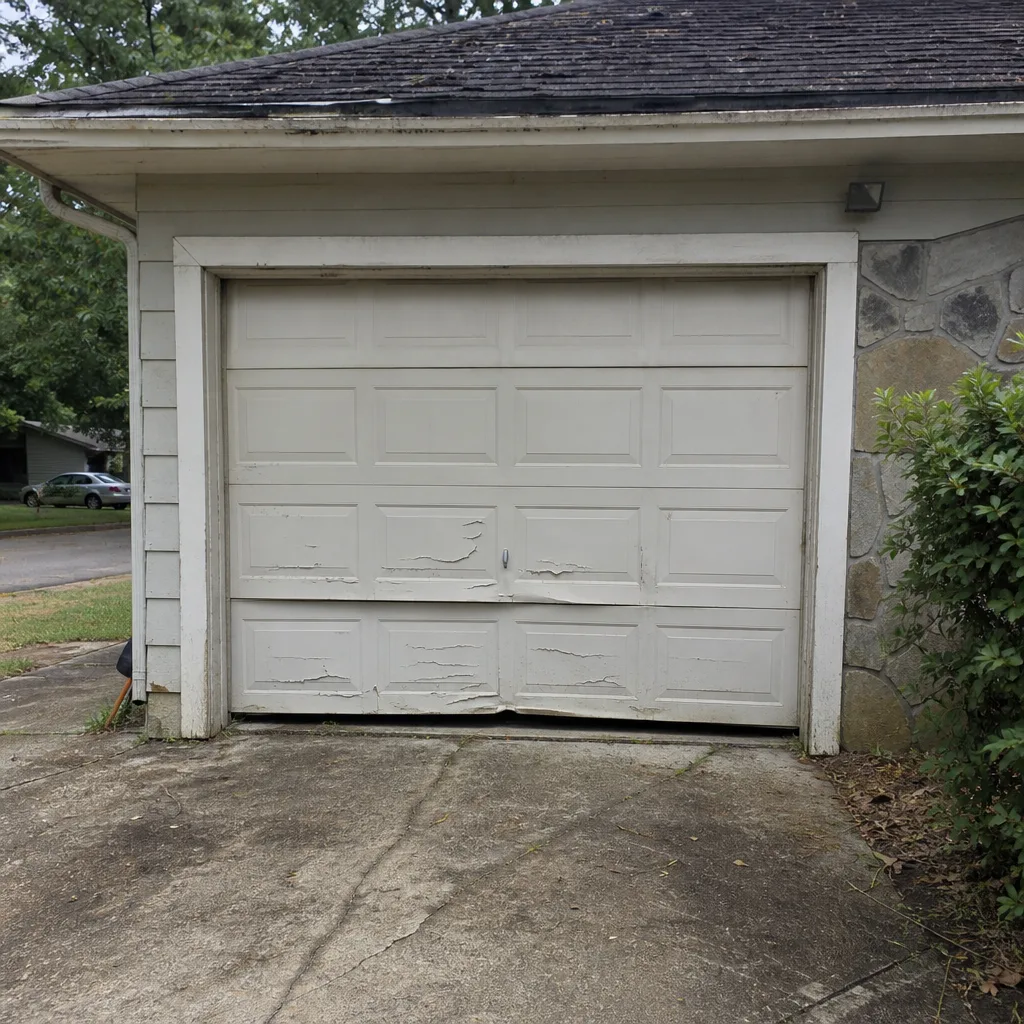 Before
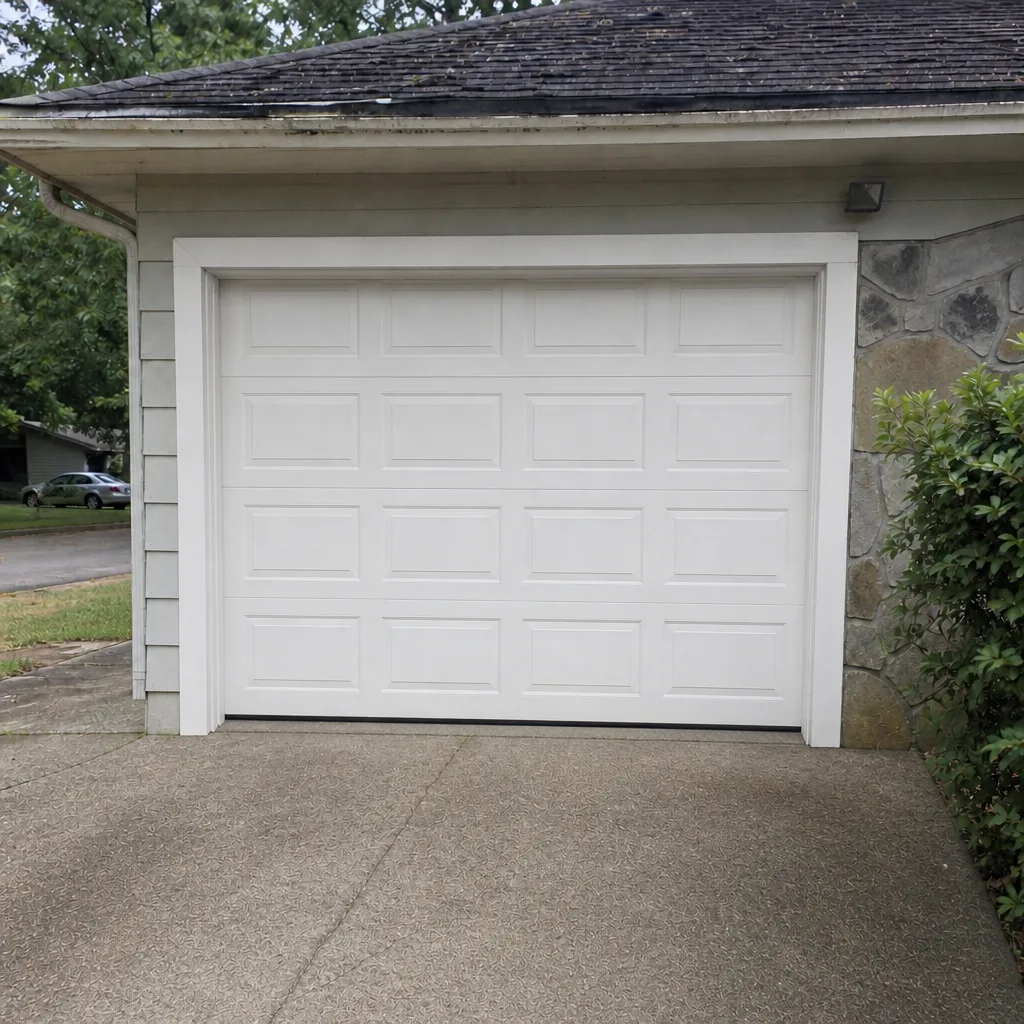 After
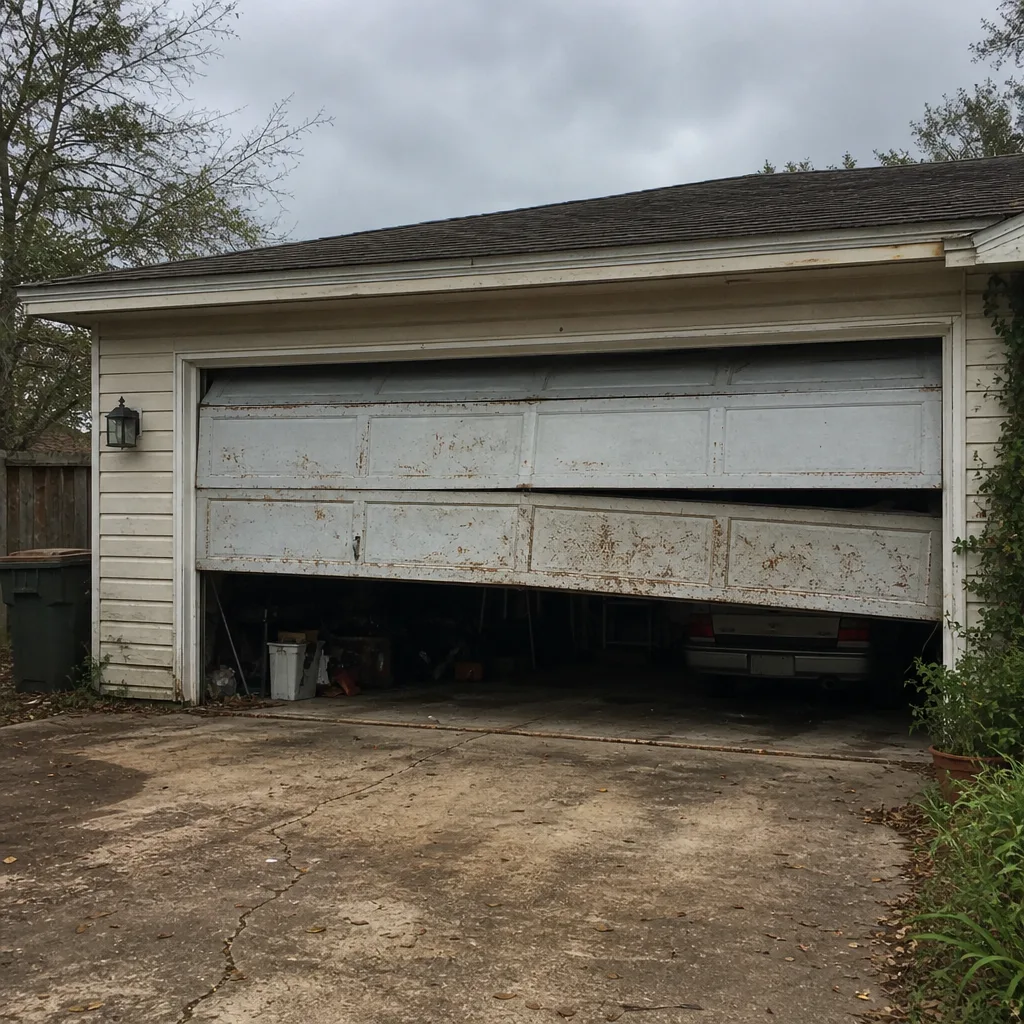 Before
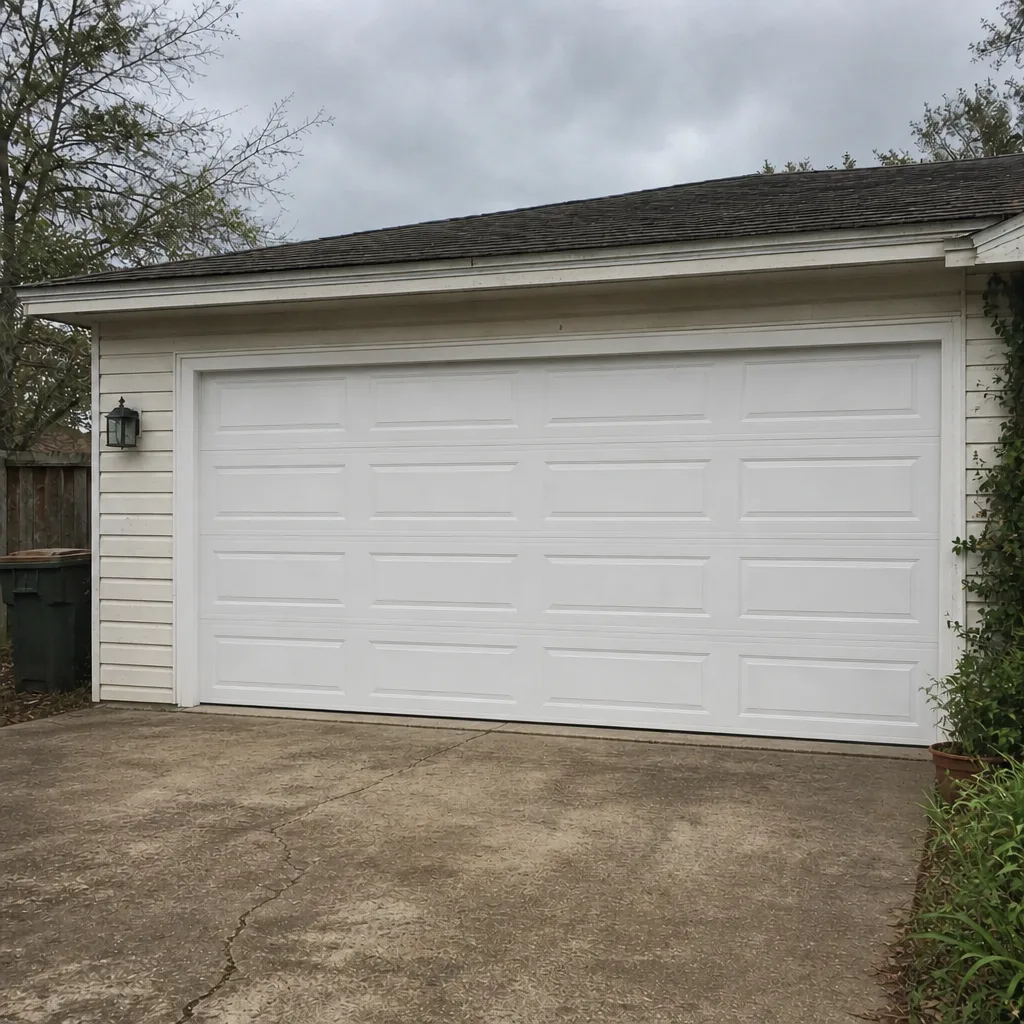 After
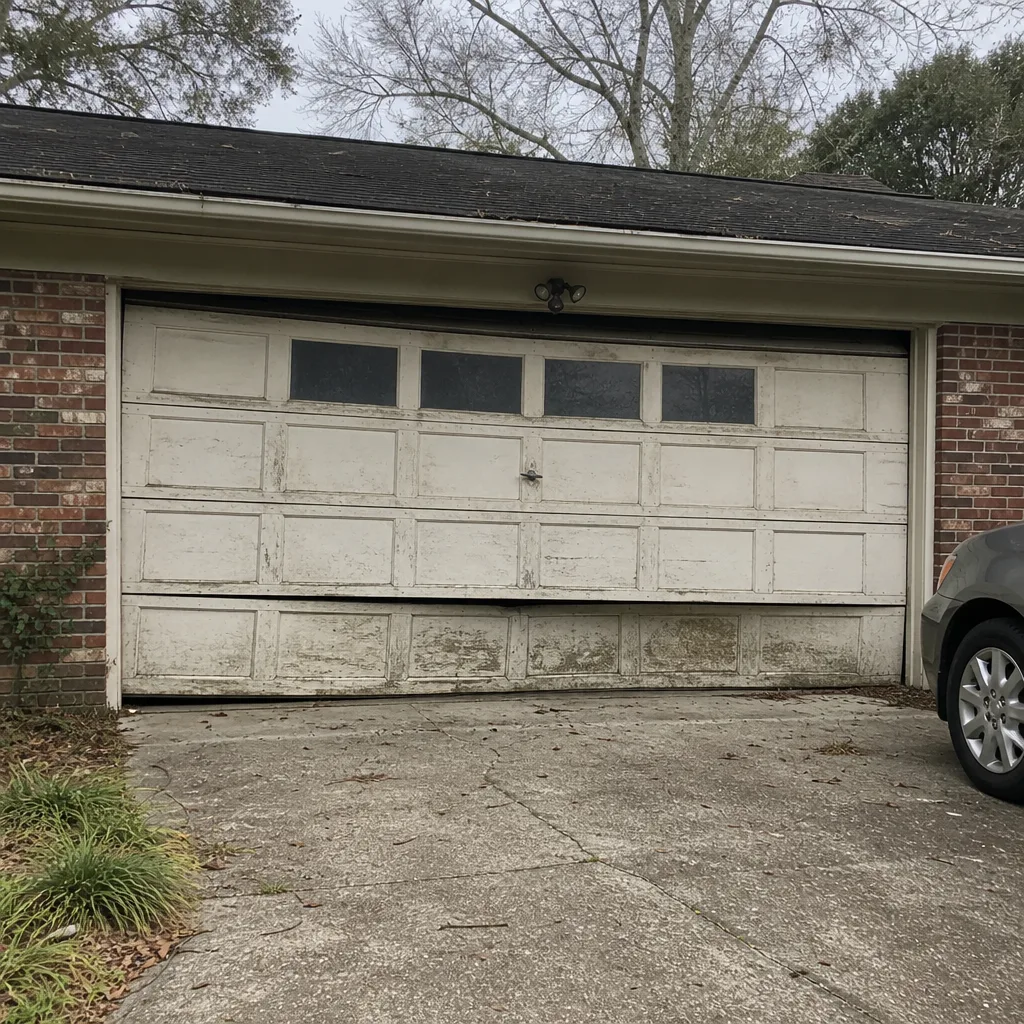 Before
 After
When to Call a Professional
Some calls can wait for a scheduled visit. Others shouldn’t. Call a technician if the door won’t move, if you see a broken or slack spring or cable, if the track is bent or the door is off its rollers, or if the door won’t stay closed or won’t latch. These are signs the door’s safety is compromised, and operating it can cause injury or more damage. If a storm has left the opening unsecured and you can’t close it, that’s a call now, not later – security and weather intrusion are immediate problems. For a door that runs but is damaged or unbalanced, book a scheduled repair so it’s addressed before the next storm arrives. Harborview Garage Door Service offers free estimates in Tallahassee – call (855) 970-6238 to get on the schedule. We answer 24/7. Fast dispatch from 7am to 7pm, Sunday through Friday.
Frequently Asked Questions
Pull the manual release cord hanging from the opener’s trolley to disconnect the door, then lift it slowly with both hands. Only do this if a visual check shows no broken springs, cables, or bent tracks. If anything looks compromised, don’t operate the door – call a technician. Call (855) 970-6238 for help. We answer 24/7. Fast dispatch from 7am to 7pm, Sunday through Friday.
Leave the door where it is and secure the opening rather than forcing it closed, because a door that won’t close usually has a mechanical failure. Photograph the damage for your insurer, block the opening from the inside with a fixed brace or tarp, and book a repair. Call (855) 970-6238 for an exact quote – estimates are free.
Expect a longer wait after a major storm, since demand spikes across the Tallahassee area as soon as the weather clears. That’s why booking early matters – get on the schedule even if the door is temporarily secured. Call (855) 970-6238 for an exact quote – estimates are free.
Photograph the whole door from the street, then each damaged area up close, then the label on the door and opener showing brand and model. Note the date you found the damage and any temporary measures you took. Keep the photos backed up and separate from debris. Call (855) 970-6238 for an exact quote – estimates are free.
No. Garage door springs and cables are under extreme tension and are the most dangerous part of the system. A spring repair should only be done by a trained technician with the right tools and safety equipment. Call (855) 970-6238 and we’ll diagnose it. We answer 24/7. Fast dispatch from 7am to 7pm, Sunday through Friday.
Our technicians are trained on Clopay, Amarr, Wayne Dalton, and Raynor doors, and on LiftMaster, Chamberlain, Genie, and Craftsman openers – covering the large majority of residential systems. Knowing your brand helps us diagnose and order the right parts first time. Call (855) 970-6238 for an exact quote – estimates are free.
The Bottom Line
Garage door emergencies in Tallahassee cluster around storm season, and professional help is hardest to reach right when demand peaks. The precautions that make the difference are simple: check the door’s balance and springs before the season, understand the manual release so you can close a door during an outage, photograph damage before cleanup, and secure an opening that won’t close with measures that actually hold. Never force a compromised door or attempt a spring repair. Stay calm, document first, and get on a technician’s schedule early. A prepared door is a door that survives the storm.
Harborview Garage Door Service provides residential garage door repair, opener repair, and full installation across the brands on most area homes. Call (855) 970-6238 for a free estimate. We answer 24/7. Fast dispatch from 7am to 7pm, Sunday through Friday.
Written by the team at Harborview Garage Door Service.