
Last updated November 15, 2026
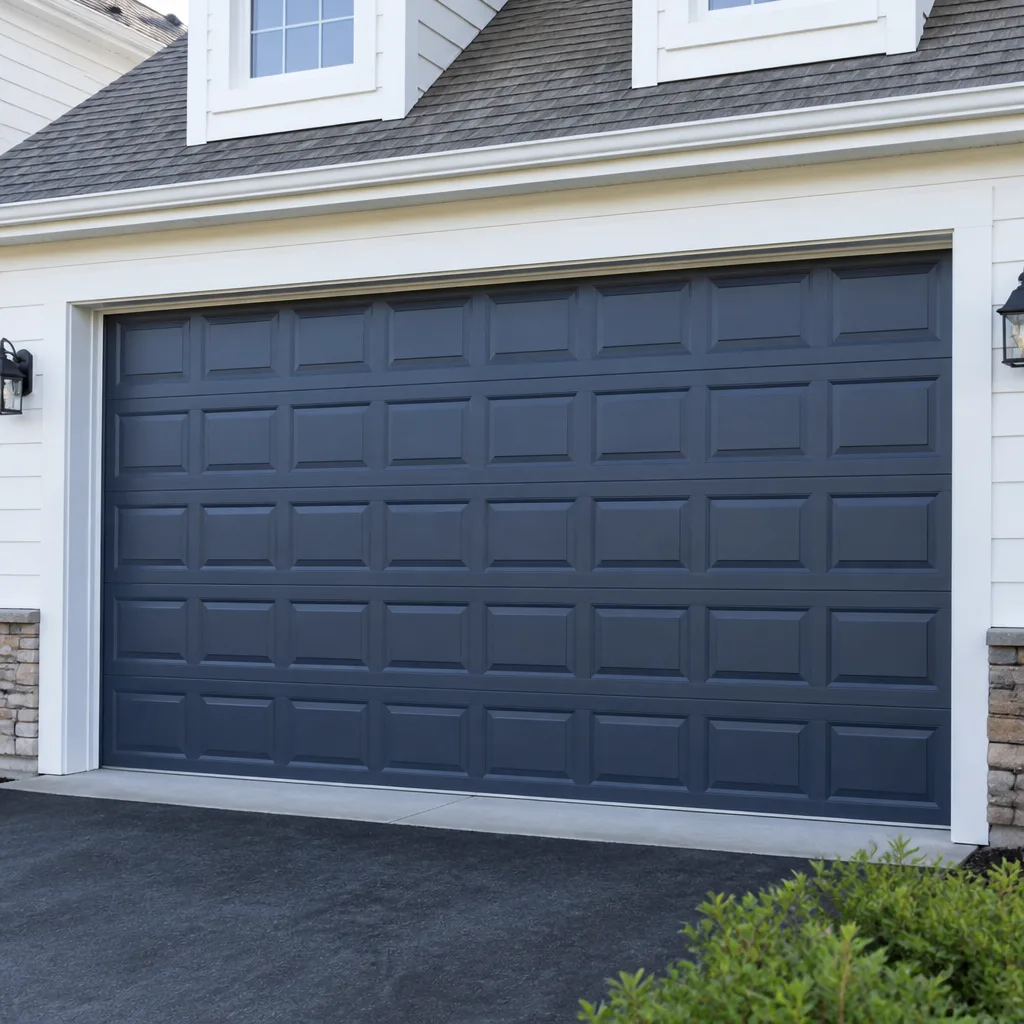 Raised-panel steel
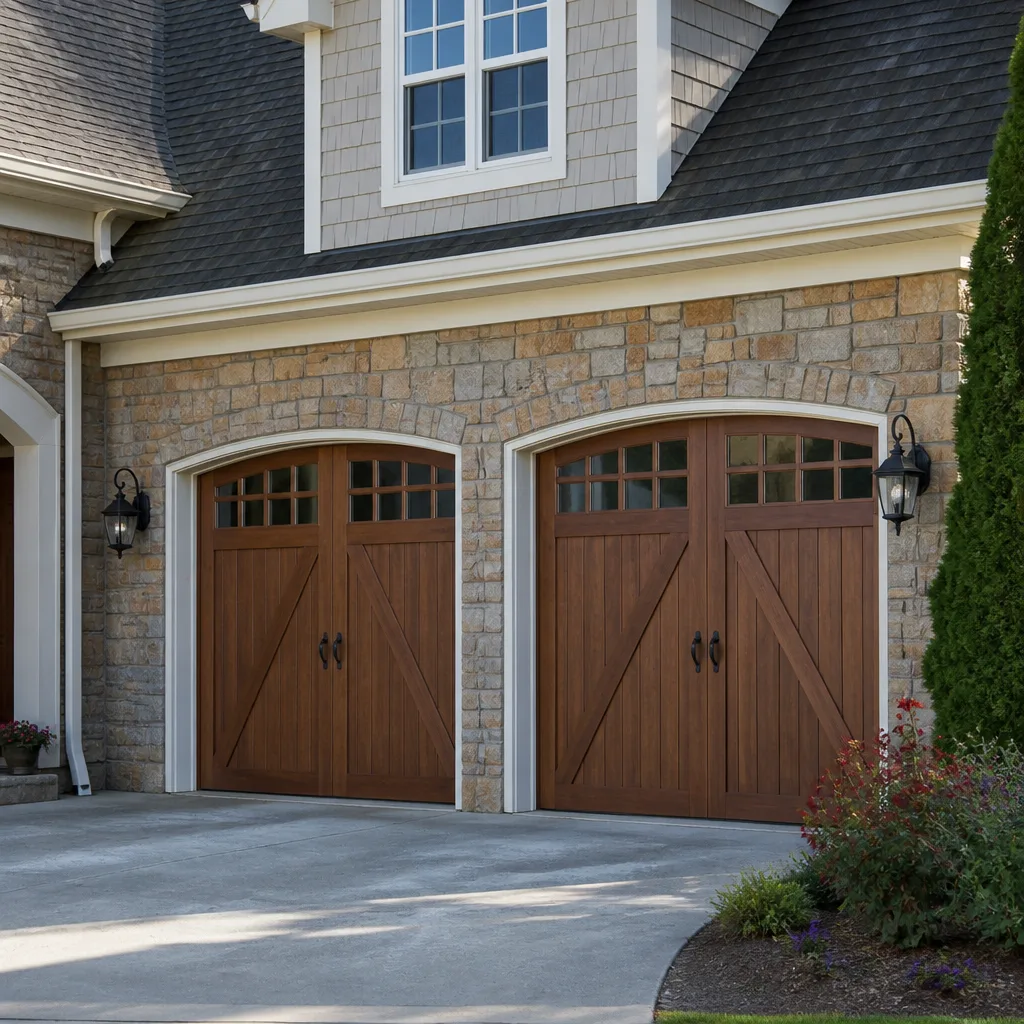 Carriage house
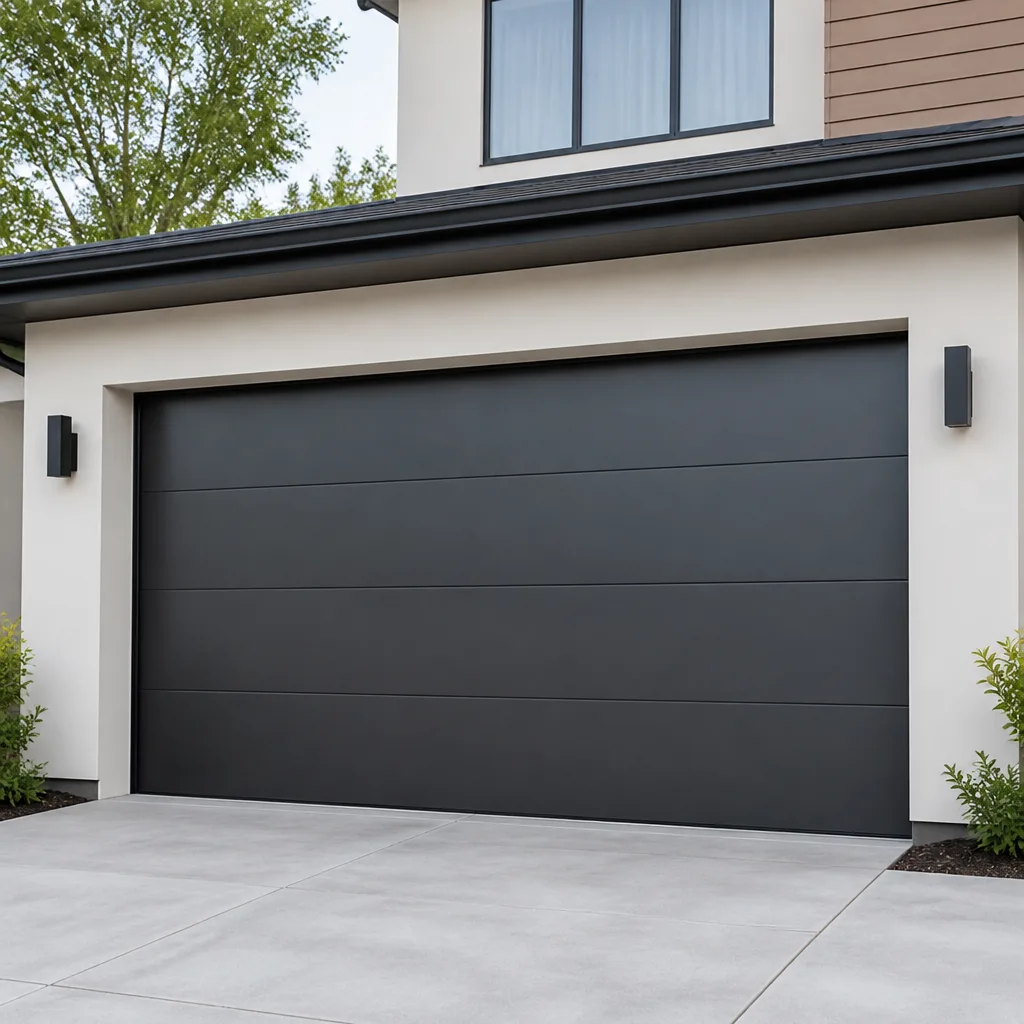 Modern flush
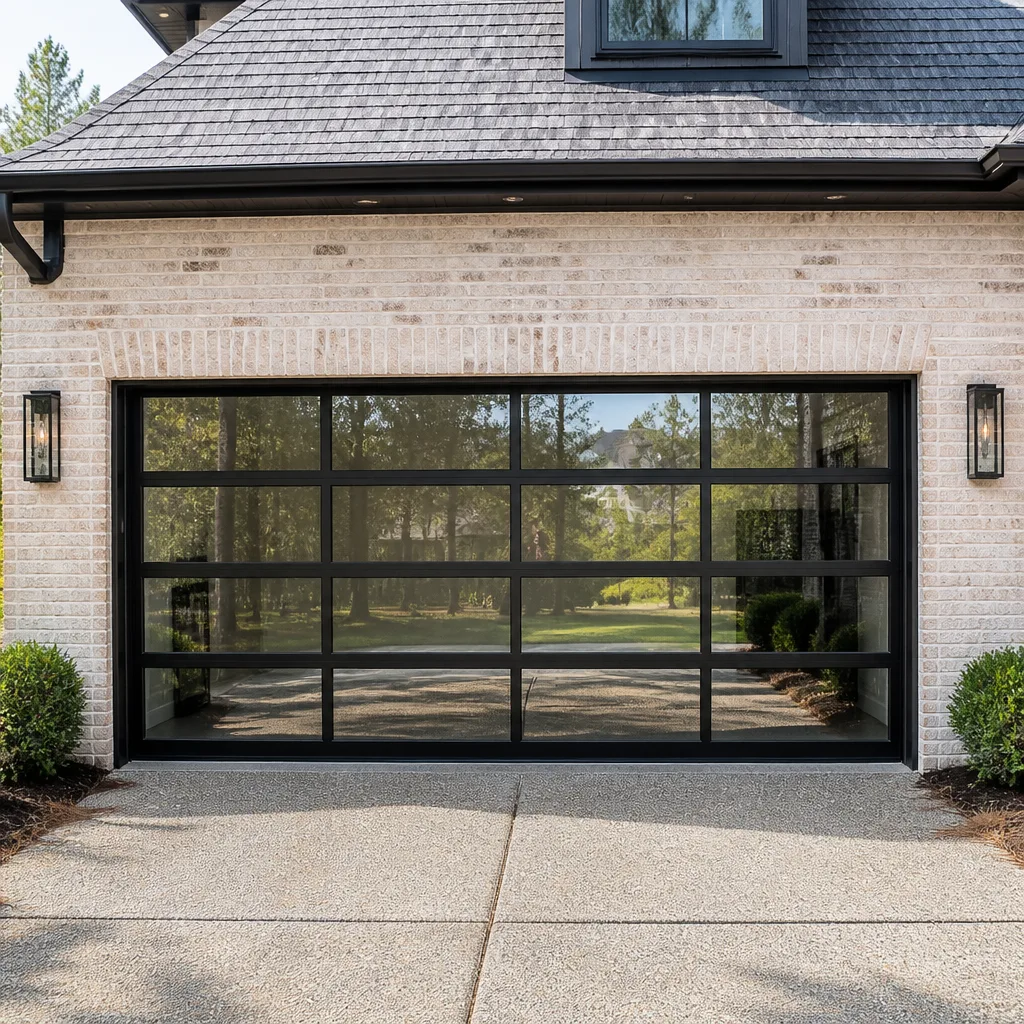 Full-view glass
 LiftMaster openers
 Chamberlain openers
Full 25-point door and opener safety check with every visit - springs, cables, rollers, tracks, and your LiftMaster or Chamberlain opener included
You get a price before we start. It does not change when the pro arrives.
Get your free estimateGarage Door Warning Signs: A Tallahassee Homeowner’s Reference Guide
A grinding noise on a garage door in Denver usually means the tracks need cleaning. In Tallahassee, that same noise is more likely to mean roller corrosion has already advanced far enough to score the track itself. That single difference tells you why symptom-spotting guides written for dry climates can steer you wrong here. Humidity, pollen, and heavy summer rain change what each sound, speed change, and sticking point actually signals under the hood. This guide decodes warning signs by mechanism, not by generic checklist. You’ll learn which component each symptom implicates, how to tell cosmetic rust from structural corrosion, how to read your opener as a diagnostic tool, and which three signs mean stop using the door today.
Quick Answer
The three garage door warning signs that require stopping use of the door immediately are: a spring that has visibly broken or separated, a door that comes down faster than it goes up or free-falls when you release it, and a door that has jumped its track or hangs visibly crooked. All other symptoms – grinding, slow response, intermittent opener behavior, surface rust – generally allow continued use until a scheduled appointment, though every one of them should be inspected before it escalates. In Tallahassee’s humid climate, rust and corrosion on rollers, cables, and springs are the most common accelerants, and early detection saves money over waiting for a failure.
Styles & brands we work with
- Raised-panel steel
- Carriage house
- Modern flush
- Full-view glass
- LiftMaster openers
- Chamberlain openers
Table of Contents
- What the Sound Actually Tells You
- When Door Speed and Movement Signal Danger
- Cosmetic Rust vs. Structural Corrosion in Tallahassee
- Reading Your Opener as a Diagnostic Tool
- The Three Signs That Mean Stop Using the Door
- How to Safely Document Warning Signs Before You Call
- Why Tallahassee’s Climate Changes the Warning-Sign Timeline
- Brand-Specific Warning Signs: Clopay, Amarr, Wayne Dalton, and Craftsman
What the Sound Actually Tells You
Every garage door makes a mechanical noise. The question is which noise, and what it implicates. In a dry climate, grinding is usually a lubrication or track-cleaning issue. In Tallahassee, it’s more often a warning about corrosion on moving parts. Our technicians have up to 9 years of experience, and the pattern repeats: by the time a homeowner in Tallahassee hears grinding, the rollers are frequently the source, not the track itself. Rollers that have rusted internally will score the inside face of the track as they roll, which means a noise complaint can turn into a track replacement if it’s ignored.
Here’s how to decode the sound by component:
- Grinding or scraping that varies with door position – most often roller corrosion or track alignment. In humid Tallahassee conditions, suspect the rollers first.
- A single loud pop or bang, followed by the door not opening – a torsion spring has likely snapped. This is a stop-use sign.
- Rattling or clunking when the door moves – loose hinge bolts, worn rollers, or a loose track bracket. Usually not urgent but worth scheduling.
- High-pitched squealing – dry or contaminated torsion spring or opener bearings. Lubrication or a spring inspection resolves it early.
- Rhythmic thumping – a bent or out-of-round roller, or a twisted track. Continue using only until you can book an inspection.
- Motor straining or humming without door movement – opener drive issue, not door issue. On a LiftMaster or Chamberlain unit, this could be a stripped gear, a failed capacitor, or a worn drive belt depending on the model.
The practical takeaway: match the sound to the part, not to a generic “call someone” reaction. In Tallahassee, where summer humidity sits high for months at a time, the timestamp on a symptom matters. A grinding noise in March likely means something different than the same noise in August after three weeks of afternoon storms. Early spring is when a lot of Tallahassee homeowners first notice roller noise, because the preceding winter rain season has had time to work on the metal.
When Door Speed and Movement Signal Danger
A garage door should descend smoothly and at the same general pace it ascends. If it doesn’t, the explanation is almost always a balance problem, and balance problems are the leading cause of serious garage door injuries. A door that falls faster than it rises means the spring system has lost tension or the door has become unbalanced, and the opener is now carrying a load it was never designed to carry. In Tallahassee’s climate, spring failures can come on faster than in dry climates because humidity accelerates corrosion on the spring itself and the cable sitting alongside it.
The numbered check below is what a technician looks for, and it’s what you can note at home safely, without touching any part of the mechanism:
- Note whether the door rises and falls at the same pace. If descent is noticeably faster, treat the door as unbalanced.
- Listen for the opener motor straining. If the opener sounds louder than usual, the spring is likely not doing its share of the work.
- Watch for the door to sag at one corner. A corner that droops means a cable is slack or a spring is losing tension on one side.
- Check the reverse test. Place a small object on the threshold and confirm the door reverses when it contacts it. If it doesn’t, stop using the door – this is a safety reversal failure.
- Note any shuddling or hopping during travel. Uneven travel usually traces to one worn roller or a slightly bent track, not a spring, but it should be checked.
Springs, cables, and torsion hardware are the dangerous part of this trade. They store enough energy to cause serious injury even when the door appears to be down and at rest. That’s why the checks above are strictly observational. Don’t disconnect the opener, don’t try to adjust the springs, and don’t lubricate a torsion spring under tension to see if it resolves the noise. Call a trained technician and describe what you observed.
Cosmetic Rust vs. Structural Corrosion in Tallahassee
Not all rust is equal, and in Tallahassee, the distinction decides whether you have a cosmetic issue or a safety concern. Surface oxidation – the orange-brown flecking on hinges, brackets, and the bottom of the door panel – is cosmetic. It dulls the finish and can progress to pitting over years, but it doesn’t compromise the mechanical integrity of the door. Structural corrosion is different: it has eaten into the load-bearing part of a spring, cable, or roller axle to the point where the metal has lost cross-section and can no longer carry its rated load.
Here’s how to tell the two apart on a visual inspection:
- Surface oxidation – flat, orange-brown discoloration on the paint or on the hinge surfaces. Scratches off with a fingernail, doesn’t leave a pit.
- Advanced surface rust – darker brown or reddish-brown, flakes when scraped, but the metal underneath still has thickness. Cosmetic enough to address at your next appointment.
- Pitting – small dark spots with visible depth. Characteristic of Tallahassee doors that have lived through a decade of humid summers without lubrication. Worth an inspection.
- Structural corrosion on springs – visible thinning or flaking on the wound coil. Spring steel under torsion load with corrosion pitting is a snap risk. Stop using the door.
- Structural corrosion on cables – frayed strands, rust bleeding from within the cable, or a cable that has gone stiff and lost flexibility. Cable failure is a stop-use sign.
- Roller axle corrosion – the roller spins poorly or not at all, and the noise is grinding. Not a stop-use sign on its own, but schedule it soon before the track gets scored.
Tallahassee’s humidity profile matters more than most homeowners realize. An unventilated garage holds moisture because the concrete slab and any residual dampness in stored items give it nowhere to go, and that moisture sits directly against the metal parts of your door. Doors facing west or sitting against a wall with poor airflow tend to show rust first. Clopay, Amarr, and Wayne Dalton all offer steel doors with factory finishes that resist surface rust well, but no painted finish stops corrosion on the moving parts. That’s lubrication and inspection, not paint.
Reading Your Opener as a Diagnostic Tool
Your opener’s behavior is diagnostic information, not just an annoyance. Intermittent response, slow operation, reversed direction, and remote-range changes all point to specific causes, and knowing which one you’re seeing shortens the diagnostic process. In our experience at garage door opener repair, the majority of “my opener is broken” calls in Tallahassee fall into four behavior patterns, and only one of them usually requires a replacement opener.
- Intermittent response from the remote – often a battery, a safety sensor misalignment, or interference from a Wi-Fi router, a new LED fixture, or a neighbor’s opener on the same frequency. On a LiftMaster or Chamberlain myQ unit, intermittent response can also be a Wi-Fi connectivity glitch rather than a hardware fault.
- Slow operation or motor straining – the door is unbalanced and the opener is carrying the load. Fix the door, not the opener.
- Door reverses immediately after closing – the safety reversal system is triggering. Causes range from a misaligned photo-eye, dust on the sensor lens, or an obstruction in the door’s path, to a limit switch out of adjustment.
- Door reverses before it reaches the floor – travel limit setting. Correctable with adjustment, not replacement.
- Motor hums but door doesn’t move – on a chain-drive Craftsman, this is often a stripped drive gear. On a belt-drive Chamberlain, it can be a broken belt. Diagnostic points to a specific part, not the whole unit.
- Opener works from the wall button but not the remote (or vice versa) – logic board or receiver issue, not the opener motor.
Knowing your drive type shortens things further. Chain, belt, and screw-drive openers each have their own failure signatures, and any technician who services all three can tell you which you’re looking at in the first five minutes. That’s the difference between a repair that fixes the actual problem and a service call that replaces parts until the symptom goes away.
The Three Signs That Mean Stop Using the Door
Some warning signs let you book an appointment and keep using the door in the meantime. Three of them don’t. These are the signs where continuing to operate the door can turn a repair into an injury or a much larger repair bill.
- A visibly broken or separated spring. If you can see a gap in the torsion spring above the door, or a stretched extension spring on a side-track door, stop using the door immediately. The remaining spring (or the surviving half of a broken spring) is under more stress than it was designed to carry, and continuing to operate the door accelerates the failure of the other side.
- A door that free-falls or greatly outpaces its upward speed. If the door drops when you release the opener, or falls much faster than it rises, the balance system has failed. The door can drop onto a person or a vehicle without warning.
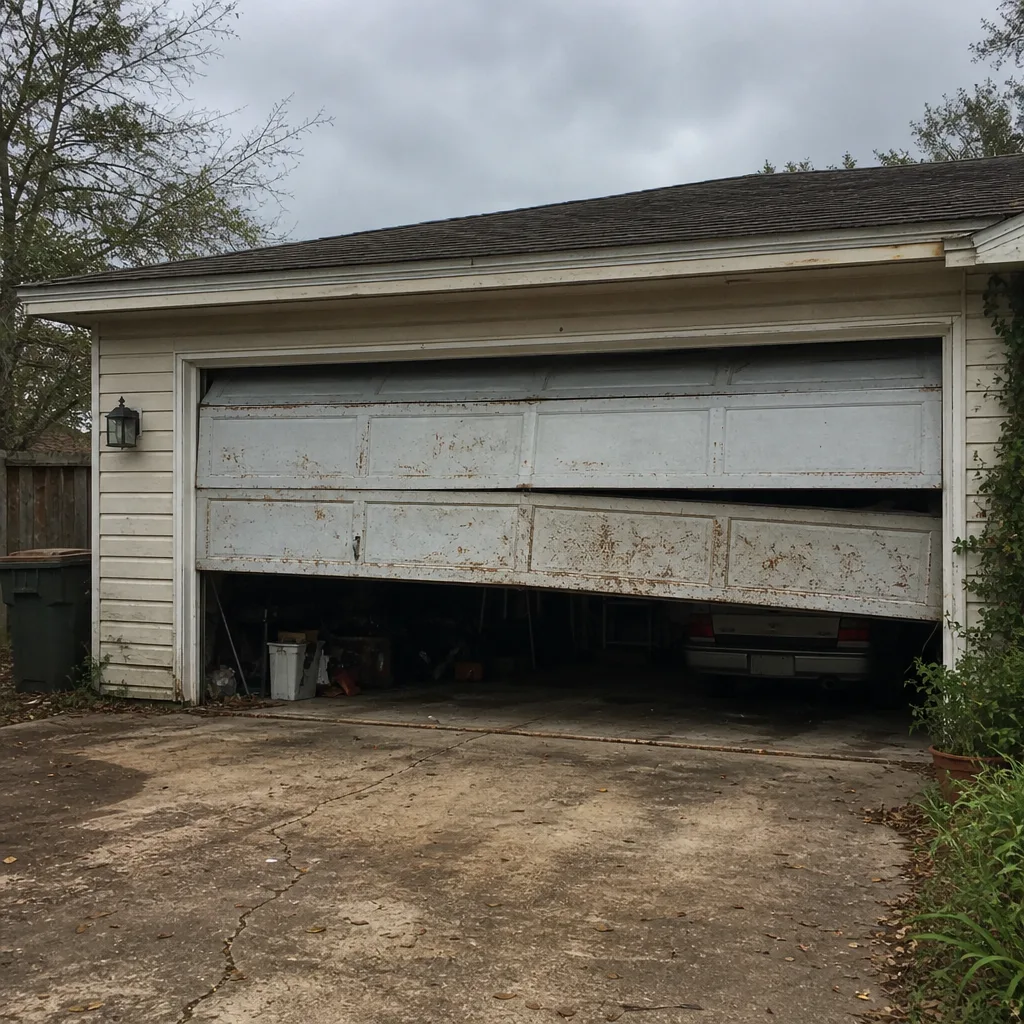
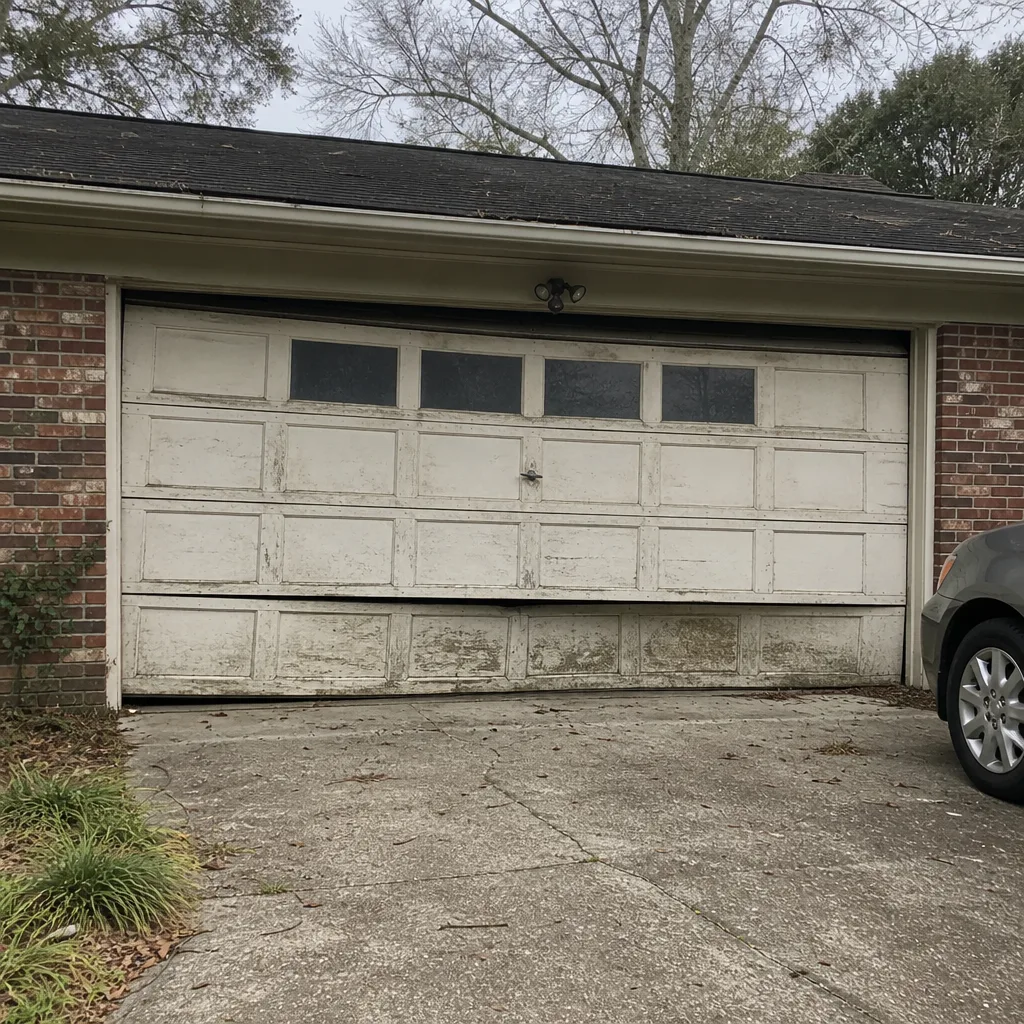
- A door that has jumped the track, hangs crooked, or has a visibly slack cable. These can mean the door is no longer supported on both sides. Any of them should stop the door in place, with the opener disengaged if you can do so safely from the floor pull cord, and no attempt to lift or move the door.
- Photograph the spring from the floor. Stand back and zoom in. A clean, well-lit photo of the torsion spring shows rust, pitting, and any visible gap without you getting near the mechanism.
- Photograph the rollers and the inside face of the track. These show corrosion and any scoring where the rollers meet the track.
- Photograph the cables from a distance. Frayed strands and rust bleeding from the cable are visible from a few feet away.
- Record a short video of the door in motion. Thirty seconds of the door going up and coming down captures speed differences, uneven travel, and any shuddering that’s hard to describe in words.
- Photograph the opener’s model plate. The label on the back of the opener shows the model and manufacture date. For a Clopay door, the panel label inside the door gives the model. Both help a technician arrive with the right parts knowledge.
- Note the symptom in plain language. “Grinding starts about halfway up and gets louder near the top” is more useful than “the door is noisy.” Write it down.
- Rollers wear faster. Rollers that would last years in a dry climate can show grinding noise and scored tracks within a shorter window here. Suspect rollers first on any grinding complaint.
- Springs corrode from the inside of the coil. The wound steel of a torsion spring traps moisture and shows pitting on the surface before it fails. A visual inspection every spring catches a lot of them early.
- Cables lose flexibility. Rust inside a cable assembly stiffens the strands until they fatigue and fray. A cable that has gone stiff is a replacement candidate, not a “keep an eye on it.”
- Wood doors take moisture. If you own a wood-composite door, look for bubbling paint or soft spots at the bottom rail. Every major brand recommends an annual paint touch-up for wood doors in humid climates, and it matters in Tallahassee.
- Insects and debris in the tracks. Tallahassee’s long warm season brings more debris into the garage, and a track with grit in it accelerates roller wear. A monthly sweep of the track groove is worth doing.
- Clopay – Clopay steel doors with factory finishes resist surface rust well, but the steel end-stiles at the bottom corners are a common corrosion point in humid climates. If the paint on the bottom rail is bubbling, the corrosion is under it. Clopay door model info is on a label inside the door, so photograph it before you call.
- Amarr – Amarr doors often use roller brackets that corrode at the pivot point, and the noise pattern starts as a light squeak before it becomes a grind. If your Amarr door has started squeaking in humid weather, that’s a bracket worth checking before it seizes.
- Wayne Dalton – Wayne Dalton doors frequently use TorqueMaster torsion systems rather than a standard exposed spring. The warning signs are different on a TorqueMaster unit: a single loud pop from inside the tube instead of an exposed snap, and the door becoming noticeably heavier. If you’ve got a Wayne Dalton door with a TorqueMaster system, tell the technician on the phone. The diagnostic approach differs.
- Craftsman – Craftsman openers are often chain drive, and the most common warning sign is motor straining without door movement – usually a stripped drive gear or a bound chain. If your Craftsman opener hums but doesn’t move the door, the diagnosis points at the gear, not the whole opener.
Everything else – grinding, intermittent opener response, cosmetic rust, squealing, thumping – generally allows continued use until you can schedule an appointment. That doesn’t mean ignore them. It means you have time to call, describe what you’re seeing, and get on a service schedule without a same-day scramble. If any of the three stop-use signs appear, call (855) 970-6238. We answer 24/7, and we can talk you through keeping the door stationary until a technician arrives.
How to Safely Document Warning Signs Before You Call
Photographing and describing what you’re seeing before you call reduces diagnostic time on the visit, which reduces the cost. A technician who arrives knowing what the door is doing spends less time on discovery and more time on the actual repair. This is one of the least-used tools a homeowner has, and in our experience it consistently shortens the service call.
Follow this numbered sequence, staying on the floor and never reaching into the door’s moving parts:
When you call, describe what you photographed and what you observed. A technician who knows it’s a corroded roller on a Wayne Dalton door versus a spring issue on an Amarr comes prepared. That’s the difference between one visit and two.
Why Tallahassee’s Climate Changes the Warning-Sign Timeline
Garage door warning signs don’t follow a universal schedule. The same symptom that means “book it next month” in a dry climate means “book it this week” in Tallahassee, because the underlying cause is accelerated. Warm, humid air is the single biggest accelerant of metal corrosion on a residential garage door. It doesn’t need salt air or direct rain contact; it just needs to sit against the metal for months at a time.
What this means in practice for a Tallahassee homeowner:
The best diagnostic rhythm for a Tallahassee garage door is simple: once in spring, once in fall, put the door down, walk around it from the floor, and look at the parts you can see from a distance. Note anything new. If you’ve been meaning to book a maintenance inspection and haven’t, the seasonal change is a natural reminder. Our technicians have up to 9 years of experience across both dry and humid climates, and the humid-climate pattern is consistent: corrosion is the lead story, not mechanical wear. For a full range of repair options, see garage door repair.
Brand-Specific Warning Signs: Clopay, Amarr, Wayne Dalton, and Craftsman
Every garage door system has brand-specific quirks that matter when you’re reading a warning sign. A technician who doesn’t know your brand guesses. A technician who does, diagnoses by knowledge, not by guesswork. We work on Clopay, Amarr, Wayne Dalton, Raynor, LiftMaster, Chamberlain, Genie, and Craftsman – covering both the door panel and the drive system independently, which means we can repair a component instead of defaulting to a full replacement. Below is what to watch for on four brands commonly installed in Tallahassee homes.
This brand-by-brand decoding is why brand-agnostic service matters. A technician trained on one or two brands will default to a repair pattern that fits those, and your Clopay or Wayne Dalton door needs the pattern that fits it. From the spring to the smart opener, one call covers the door and the drive system. If you’re considering a new installation, brand-informed guidance means you get an assessment of fit, not a pitch for what happens to be on hand. Our Tallahassee service covers the full range of the door and the opener.
Common Mistakes to Avoid
- Lubricating a torsion spring under tension to see if the noise stops. Lubrication on the wound coil doesn’t fix the noise and can mask the corrosion that caused it. Leave spring work to a trained technician.
- Calling the opener “broken” when the door is the problem. Slow operation, motor straining, and reversed direction are often door balance symptoms, not opener symptoms. Replacing the opener without balancing the door is the most common repeat-service pattern we see.
- Treating a grinding noise as cosmetic. In Tallahassee’s humidity, grinding that gets ignored long enough to score the track turns a roller replacement into a track replacement. Address it early.
- Disconnecting and reconnecting the opener to test if the door will “work without power first.” On an unbalanced door this can cause the door to drop. Note the behavior, don’t test it.
- Photographing warning signs without capturing the model label. A photo of the grinding roller is useful; a photo of the roller and the model label on the opener and the door is twice as useful.
- Assuming a wet winter has picked up where the last inspection left off. Corrosion keeps working through every rainy season in Tallahassee. A door that passed inspection in October can have meaningful corrosion by the following April.
- Using a “best brand” recommendation from a neighbor’s install without checking your own door’s hardware. A Clopay door and a Wayne Dalton door have different spring systems, and what’s right for one is not right for the other.
See the difference
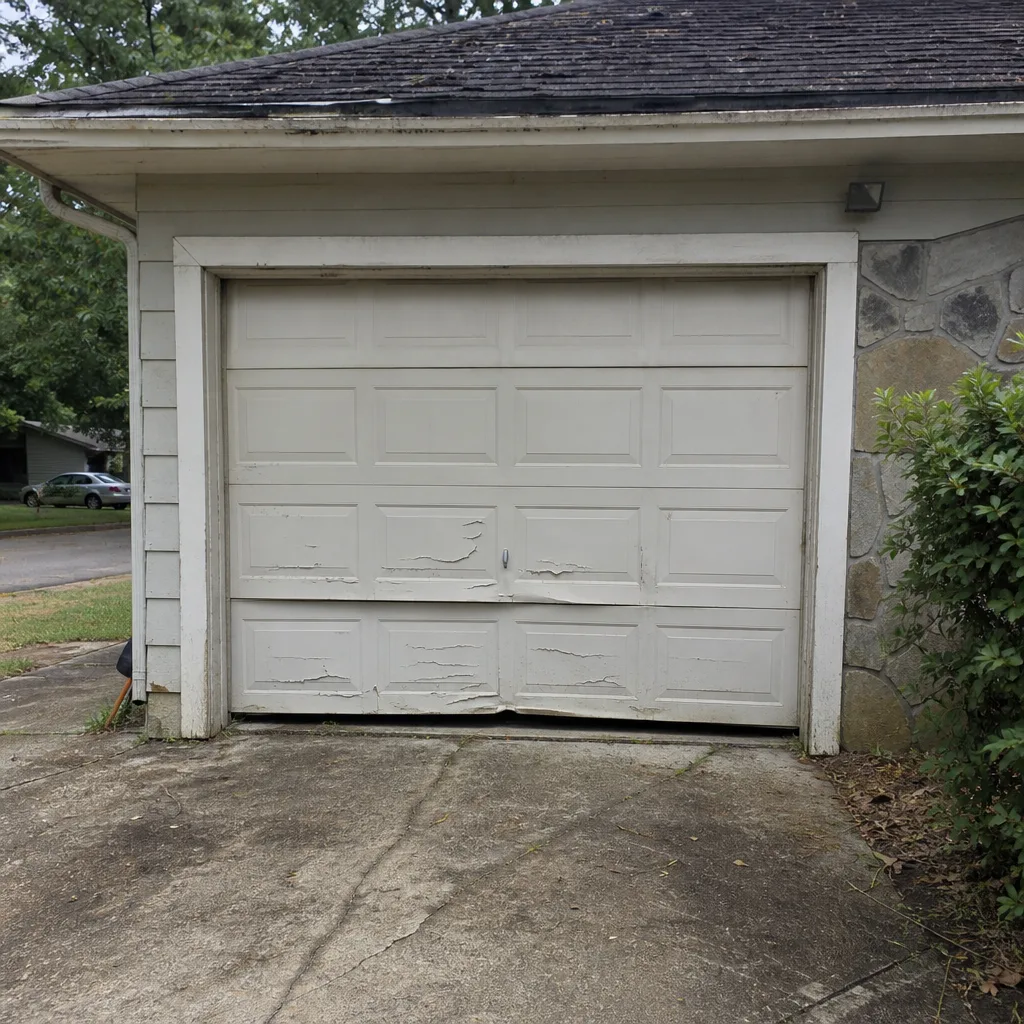 Before
 After
 Before
 After
 Before
 After
When to Call a Professional
Call a professional when you see any of the three stop-use signs – a broken spring, a free-falling or unbalanced door, or a door that has jumped the track. Call when the noise has changed character or is getting louder week over week, when the opener behaves differently from how it did last month, or when you see rust that has pitted rather than just discolored the paint. Call when you’re not sure. A symptom description over the phone often tells a technician more than the homeowner realizes. Harborview Garage Door Service offers free estimates in Tallahassee – call (855) 970-6238. We answer 24/7. Fast dispatch from 7am to 7pm, Sunday through Friday. Our technicians have up to 9 years of experience across both door panels and drive systems, and every price is set by a written estimate agreed before any work starts.
Frequently Asked Questions
The most common warning signs in Tallahassee are roller corrosion causing grinding, spring corrosion from humid air, and opener straining from an unbalanced door. Surface rust on hinges and brackets is usually cosmetic, but rust that has pitted the spring or frayed a cable is a structural concern. Call (855) 970-6238 for an exact quote – estimates are free.
Most garage door repairs in Tallahassee fall into a range depending on the part, the door type, and whether the track or the panel also needs work. The written estimate sets the final price, and the quote is agreed before any work starts. Prices are per job, quoted on site. Call (855) 970-6238 for an exact quote – estimates are free.
Same-day service is available for many repair calls. When you call, describe the symptom and any of the three stop-use signs, and we can tell you what dispatch windows are open. We answer 24/7. Fast dispatch from 7am to 7pm, Sunday through Friday. Call (855) 970-6238 for an exact quote – estimates are free.
No. The written estimate you agree to before work starts is the price. Our technician photographs the issue on arrival and confirms the diagnosis with you before making repairs. If the diagnosis changes because initial symptoms pointed at the wrong component, we tell you before any additional work. Call (855) 970-6238 for an exact quote – estimates are free.
Yes. Harborview Garage Door Service is state-licensed, insured, and bonded. Every technician is trained on the eight major door and opener brands and works within the written estimate process. Call (855) 970-6238 for an exact quote – estimates are free.
No. A door with one broken spring in a matched pair is a stop-use sign. The remaining spring is under more load than it was designed for, and continuing to operate the door accelerates its failure. Call (855) 970-6238 for an exact quote – estimates are free.
Yes. We service Clopay, Amarr, Wayne Dalton, Raynor, LiftMaster, Chamberlain, Genie, and Craftsman, covering both the door and the opener drive system independently. That means we can repair the failed component rather than defaulting to a full replacement. Call (855) 970-6238 for an exact quote – estimates are free.
In Tallahassee, a grinding noise usually points at corroded rollers scoring the track rather than the track needing cleaning. That’s the opposite of what a homeowner in a dry climate would assume, and it matters because ignoring it turns a roller replacement into a track replacement. Call (855) 970-6238 for an exact quote – estimates are free.
The Bottom Line
Warning signs on a garage door are not universal. The same grinding noise means different things in different climates, and in Tallahassee’s humidity, corrosion is the lead suspect for most mechanical noise. The four rules: match the sound to the part, not to a generic reaction; distinguish cosmetic rust from structural corrosion by whether the metal has pitted or thinned; read your opener’s behavior as diagnostic information; and treat a broken spring, a free-falling door, and a jumped track as stop-use signs. Everything else gets on a service schedule before it escalates. In our experience, early detection consistently reduces both the complexity and the cost of the repair. Call (855) 970-6238 for a free estimate. We answer 24/7. Fast dispatch from 7am to 7pm, Sunday through Friday.
Written by the team at Harborview Garage Door Service.